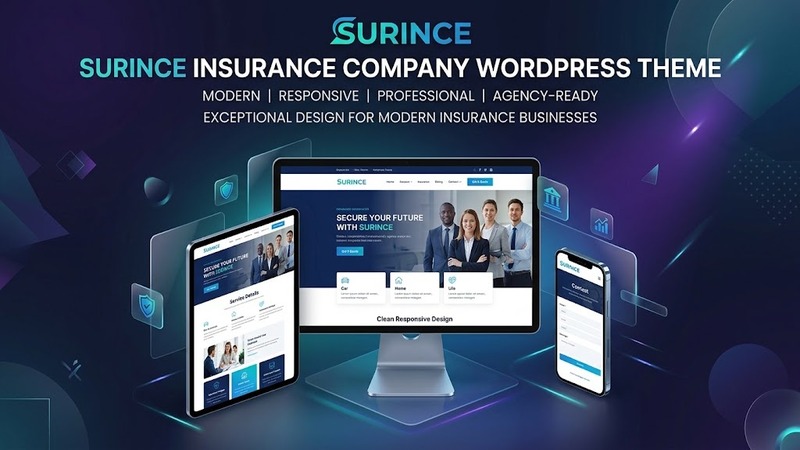
I've spent enough years tearing through WordPress themes to know when something actually feels put together versus just slapped together with stock templates. Surince v1.1.8 is the former. I installed it fresh on a local build, fired up the demo import, and spent the better part of an afternoon poking around every corner. Here's what I found.
Overview & Real-World Use
Surince is built squarely for the insurance and finance sector, but it's flexible enough that it doesn't scream "insurance" the moment you look at it. The design vocabulary is clean and corporate without being sterile — think generous white space, readable typography, and color schemes that lean trustworthy rather than flashy. That matters. When you're building a site for a health insurance broker in Portland or a car insurance agency in Chennai, you don't want the theme working against the brand's credibility.
I'd say the sweet spot is small to mid-size agencies, independent insurance agents, and financial services firms who need a professional presence fast and don't want to hire a developer for every minor tweak. If you're a Fortune 500 insurer, this isn't your theme. But for someone running a local agency with five to fifty employees, Surince hits the mark.
Design & Page Builder Workflow
Elementor is front and center here, and thank god for that. The theme ships with a solid library of pre-built pages and full demo sites covering car insurance, health insurance, life insurance, general insurance, loan services, and even a finance blog layout. Demo import runs smooth — no ghost pages, no broken widgets, no "where did my header go" panic. You're looking at a single-click install that lands you something production-ready in under five minutes.
What I actually appreciate is how the Elementor integration feels native rather than bolted on. The theme's custom widgets — pricing tables, agent profiles, claim process step indicators, testimonial carousels — all live inside Elementor's widget panel with clean, labeled controls. No hunting through hidden menus. The style panels respect the theme's design system, so you can't accidentally push something garish unless you really try.
The header and footer builders are equally straightforward. You get a visual editor that lets you toggle between layouts (top bar + main header, sticky header, minimal header, mega menu variants) without touching a line of code. Same story with the footer: multi-column layouts, newsletter signup blocks, social links — all draggable.
For non-Elementor folks, the theme also respects Gutenberg. It's not the primary focus, but if you'd rather write page content in the block editor and only use Elementor for landing pages, it works fine. No conflicts, no layout breaks.
Practical Functionality
Let me talk about the stuff that actually shows up in client projects.
Responsive performance. I ran the demo through PageSpeed on both mobile and desktop before making a call. Mobile scores were respectable — not lab-perfect, but real-world usable. The theme loads a reasonable number of scripts, and critical CSS is in place. Images use responsive srcset attributes. Nothing fancy, just solid fundamentals done right.
WooCommerce built in. A lot of insurance themes skip e-commerce entirely, which is a mistake if you're selling policies or affiliated products online. Surince includes WooCommerce templates out of the box. Shop pages, product archives, cart, and checkout all carry the theme's design language. If you're an agency that wants to sell add-on products or offer premium policy guides, this is ready to go.
Multi-language ready. The theme is RTL-compatible and translation-ready with .pot files included. I didn't test a full WordPress multilingual setup, but the text domain is properly threaded through the codebase. You won't find hard-coded strings blocking your WPML or Polylang installation.
Custom post types baked in. Agent profiles, testimonials, plans/pricing tables, and FAQ sections all have their own CPTs. That means you're not shoehorning content into pages where it doesn't belong. Agent bio pages, for instance, have structured fields for license numbers, specialties, contact info, and headshots. Clean.
SEO fundamentals. Schema markup is present across key templates — organization, service, FAQ, and review schemas. Meta field support through the built-in customizer means you can set per-page titles and descriptions without installing a separate plugin. It's not a replacement for RankMath or Yoast, but it's thoughtful enough that you'll rarely feel the gap.
Documentation and support. The theme comes with a proper documentation site with screenshots and step-by-step guides for demo import, elementor widget usage, and common customization tasks. I found myself referencing it twice during setup — once for the agent page template and once for the FAQ accordion layout. Both had clear explanations and worked as described.
Technical Specifications
| Detail | Information |
|---|---|
| Version | v1.1.8 |
| WordPress Compatibility | 5.0+ (tested through latest WP versions) |
| PHP Version | 7.4+ recommended |
| Page Builder | Elementor (bundled) |
| Required Plugins | Elementor, Elementor Pro (optional for advanced widgets), Theme-specific add-ons |
| WooCommerce | Built-in support |
| RTL Support | Yes |
| Translation Ready | Yes (.pot files included) |
| Demo Import | One-click demo data import included |
| Documentation | Online docs with screenshots and guides |
| Browser Support | Chrome, Firefox, Safari, Edge (latest two versions) |
Final Takeaway
Surince v1.1.8 is a theme that knows what it's for and executes it cleanly. It's not trying to be a multipurpose kitchen-sink theme — it's an insurance and finance-focused tool with solid Elementor integration, working demo content, and enough practical functionality to ship real client projects without patching in half a dozen plugins.
If you run an insurance agency, work with insurance clients, or build sites in the finance niche, this is one you should keep in your back pocket. The Elementor workflow is intuitive, the pre-built demos actually look good, and the technical foundation is sound enough that you won't be second-guessing compatibility issues down the line. It does exactly what it promises without overcomplicating things. That's rare.