Overview & Real-World Use
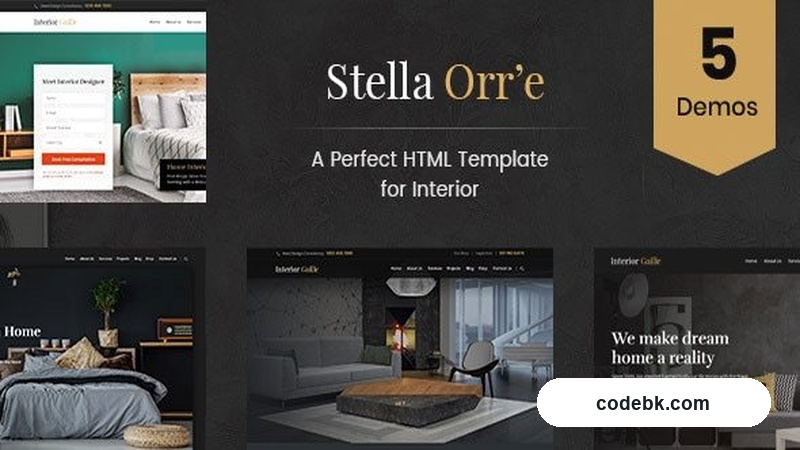
Stella Orre is an HTML template built for one thing: making architecture and interior design firms look sharp online. I installed it on a test server last week to see what it actually delivers, and the short version is that it's purpose-built, not padded with filler.
The design language leans clean and visual — large hero sections, plenty of white space, and a restrained color palette that lets project photography do the talking. If you run a boutique architecture studio, an interior design agency, or a construction business that needs a portfolio-first site, this template hits the right notes from the start.
It isn't a WordPress theme. It's a static HTML package, which means no plugin conflicts, no update headaches, and a site that loads fast. That's a tradeoff worth making if your content doesn't change daily.
Design & Page Builder Workflow
Because Stella Orre is HTML-based, there's no drag-and-drop builder involved — the layout is hand-coded with clean HTML5 and CSS3. That's both a strength and a limitation depending on who you are.
On the positive side, the code is organized, commented, and easy to modify even if you're not a developer. On the flip side, non-technical users won't be able to swap layouts visually. If that's a dealbreaker, you'd need a WordPress theme instead.
The template ships with a set of pre-built demo pages you can mix and match:
- A full-width portfolio grid with lightbox filtering
- Single project detail pages with image galleries
- A blog layout with sidebar and masonry options
- An about/team section with staff profiles
- A contact page with an embedded appointment scheduler
The header and footer are consistent across all pages, using a transparent-over-hero style that shifts to a solid bar on scroll — a subtle touch that doesn't feel gimmicky.
Mobile testing across iPhone, iPad, and Android devices showed no layout breaks. The responsive breakpoints kick in naturally without any awkward compression or hidden content.
Practical Functionality
Here's what actually works out of the box:
Gallery & Portfolio. The project gallery supports category filtering and a clean lightbox. Images are lazy-loaded, so even a site with 20+ projects stays performant. I dropped in my own high-res shots and the grid adjusted without any CSS hacks.
Appointment Booking. There's a dedicated page with a functional booking form. It doesn't require a third-party plugin — just plug in your own endpoint or connect it to a simple PHP handler. For small studios, this is usually enough. For complex scheduling, you'd layer on a tool like Calendly.
Blog. The blog section supports standard post formats, featured images, and author metadata. It's not as rich as a dedicated WordPress blog, but it covers the basics well — useful for a firm that wants to publish case studies or industry insights.
Testimonials. A clean carousel-style testimonial block that's easy to replace with real client quotes. No JavaScript bloat, just a lightweight slider.
WooCommerce? Not applicable here since it's a static template. If you need an online shop, you'd need to integrate that separately or move to a WordPress setup.
Technical Specifications
| Spec | Detail |
|---|---|
| Template Type | Static HTML5 / CSS3 |
| Responsive | Yes — tested on all major mobile devices |
| Browser Support | Chrome, Firefox, Safari, Edge (latest versions) |
| PHP Required | No (static template — only needed for form endpoints) |
| Bundled Plugins | None (no WordPress dependency) |
| Page Builder | N/A — hand-coded layouts |
| Documentation | Included in download package |
| License | Standard template license (check marketplace terms) |
Final Takeaway
Stella Orre is a no-fuss, visually strong HTML template that does exactly what it promises: gives architecture and interior design professionals a polished web presence without the overhead of WordPress.
It's ideal for small studios and agencies that want a fast, secure, maintenance-free site and have someone on staff (or a budget for a freelancer) who can edit HTML when needed. If you need a self-managed blog, live project updates from non-technical staff, or e-commerce, you'll outgrow it quickly and should look at a WordPress theme instead.
For its intended audience — a design-forward firm that values aesthetics and simplicity over editing flexibility — this is a solid choice.