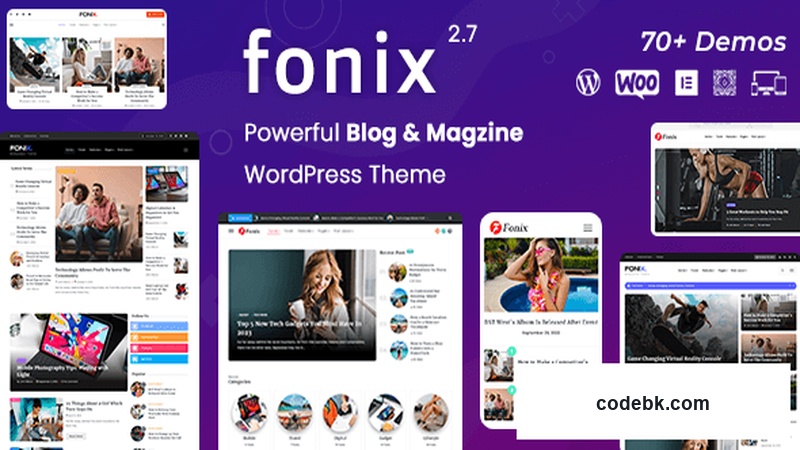
I've worked with a lot of publishing themes over the years, and most of them fall into one of two camps: either they're feature-heavy but bloated, or they look great in screenshots but break down when you actually try to build something complex with them. Fonix is interesting because it mostly avoids both traps. It's built for people who need a clean, modern foundation for editorial or blog content and want the flexibility to adapt it across niches without rewriting their entire workflow.
Overview & Real-World Use
Fonix v3.5 is aimed squarely at publishers and content creators who need a theme that can handle variety without feeling rigid. The developers positioned it for newspapers, magazines, and general blogs, and it's clear they intended it for exactly that kind of use. Whether you're running a personal lifestyle blog, a tech publication, a food site, or a health and beauty magazine, the layout structure supports those different content styles without forcing you into a single visual identity.
What stands out is how approachable the theme feels from the start. It doesn't assume you're a seasoned developer, but it also doesn't limit you if you are. The demo packages give you a solid starting point, and the overall aesthetic is modern and minimal enough to feel current rather than chasing trends that will date quickly.
Design & Page Builder Workflow
The theme ships with Elementor integration, which makes layout customization straightforward. You get a collection of pre-built demos that cover different content focuses, and importing one is fairly frictionless. Once you're working inside Elementor, the section control is intuitive — you can rearrange grid layouts, adjust typography, and tweak spacing without fighting against the theme's restrictions.
One thing I noticed is that the theme plays nicely with Gutenberg as well, so if you prefer native block editing, you're not locked into Elementor. The flexible grid structures work with both, which gives you room to choose your preferred builder per project.
The header and footer options are also worth mentioning. You can build custom headers with menus, logos, and widgets, and the footer area supports multiple columns with ease. These aren't afterthoughts — they feel like core parts of the design system.
Practical Functionality
Functionally, Fonix covers the essentials without overcomplicating things. The WooCommerce setup works for stores that need to sit alongside editorial content, which is useful for lifestyle or fashion brands that sell products. The shop integration is clean but not deeply customized — it's solid for basic e-commerce, not a replacement for a dedicated storefront theme.
Responsive behavior is reliable across mobile and tablet views. The layouts adjust without collapsing or breaking, and images scale appropriately. If you're publishing on the go or managing content from a phone, the admin experience is decent enough to work with.
For multilingual sites, the theme supports common translation plugins. This isn't a major selling point, but it works when you need it to.
The overall performance feels reasonable — not the lightest theme you'll find, but not resource-hungry either. With proper image optimization and a caching layer, it loads cleanly on most shared hosting environments.
Technical Specifications
| Specification | Details |
|---|---|
| WordPress Version | 5.8+ |
| PHP Version | 7.4+ |
| Page Builder | Elementor (Gutenberg compatible) |
| WooCommerce | Supported |
| Translation Ready | WPML, Polylang compatible |
| Demos Available | Multiple multi-category layouts |
| Documentation | Included with purchase |
| Child Theme | Not included by default |
Final Takeaway
Fonix v3.5 is a practical, flexible choice for publishers and bloggers who need a theme that can handle multiple content types without feeling constrained. It's not the flashiest option on the market, and it doesn't push you toward expensive add-ons to unlock basic functionality. If you want a straightforward publishing theme that works well with Elementor, supports WooCommerce, and adapts cleanly across niches, this is a solid pick. It's especially useful for smaller teams or solo creators who need a reliable foundation they can build on without starting from scratch.