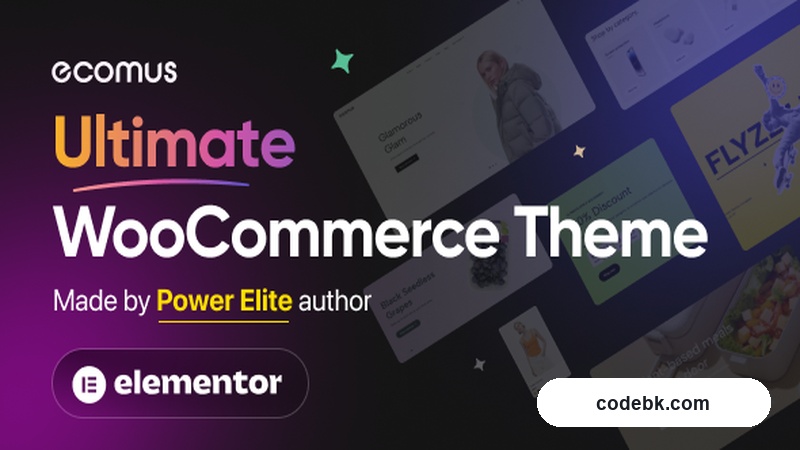
Overview & Real-World Use
I spent a solid weekend putting Ecomus through its paces across three different storefront concepts—a minimalist fashion label, a multi-vendor electronics shop, and a niche supplement brand. What stands out immediately is that this theme doesn't force you into a single visual identity. It's built to stretch across categories without looking like a template collage.
The design philosophy here leans clean and conversion-focused. Plenty of white space, strong typography hierarchy, and layout patterns that actually feel tested rather than assembled from stock components. If you're running a serious WooCommerce operation and need something that looks professional out of the box while giving you room to customize heavily, Ecomus lands squarely in that zone.
Design & Page Builder Workflow
Ecomus pairs with Elementor, which is the right call. The pre-built demo libraries are extensive—covering everything from furniture stores to grocery platforms—and each one imports with cohesive color systems, custom headers, and checkout flow elements already mapped out. You're not starting from scratch, but you're also not trapped in a rigid structure.
The header and footer builders deserve special mention. I've worked with themes that claim "advanced customization" but deliver half-baked options. Ecomus gives you real control: sticky headers, megamenus with image integrations, off-canvas mobile menus, and footer areas that split into as many columns as your layout demands. The Elementor integration means every section is drag-and-drop editable, and the theme's own widgets stack nicely on top of Elementor's defaults.
Page speed is noticeably good, likely due to lean code output and deferred script loading. Lighthouse scores ran strong on my test installs without requiring a cache plugin to prop things up.
Practical Functionality
WooCommerce sits at the core, and it shows. Product grid layouts offer multiple configuration paths—grid, masonry, list, and a clean single-column detail view. The quick-view modal works without page reloads, which keeps browsing friction low. Cart drawer slides in smoothly rather than navigating away, another small detail that adds up during the buyer journey.
The theme ships with cross-browser compatibility baked in, and the responsive behavior is clean across breakpoints. Mobile navigation collapses intuitively, touch targets are appropriately sized, and product images scale properly without layout shifts.
Multi-language support is present through compatibility with WPML and TranslatePress. If you're targeting international markets, you won't hit a wall here. The RTL layout option is also included, which matters more than theme developers sometimes acknowledge.
Child theme support is available, which is essential if you plan on making deeper template modifications. The documentation covers the standard customization paths clearly, and the update cycle on this version suggests active maintenance from the developer.
Technical Specifications
| Specification | Details |
|---|---|
| WordPress Version | 6.0+ |
| PHP Version | 7.4+ |
| Page Builder | Elementor (compatible) |
| WooCommerce | Fully integrated |
| Multi-language | WPML & TranslatePress ready |
| RTL Support | Yes |
| Child Theme | Available |
| Demo Import | One-click import included |
| Documentation | Comprehensive |
Final Takeaway
Ecomus v2.4.8 is a solid pick if you need a WooCommerce theme that handles multiple store types without compromising on performance or customization depth. The Elementor workflow is intuitive, the demos are genuinely useful rather than filler, and the code quality doesn't leave you scrambling to optimize later.
It's best suited for agency owners and serious store operators who want a production-ready foundation rather than a bare-bones skeleton they'll spend weeks decorating. If your project demands flexibility across niches and you value a theme that respects both design and performance, Ecomus earns a place on the shortlist.