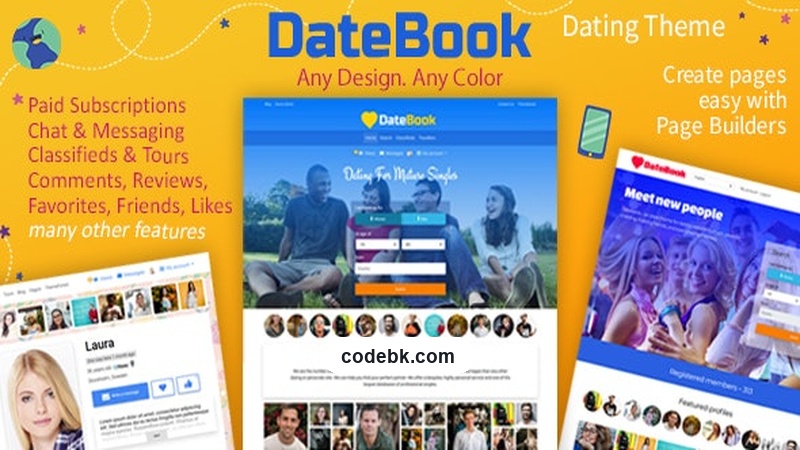
Overview & Real-World Use
I've reviewed my fair share of dating themes over the years—some are gorgeous but functionally hollow, others are feature-packed but look like they were designed back when MySpace was relevant. DateBook lands somewhere in the middle ground that actually matters: it's built for people who need a working dating site now, not a design exercise.
The theme is aimed squarely at entrepreneurs and small agencies building niche dating platforms. Think regional matchmaking services, hobby-based dating communities, or subscription-driven sites that don't need the enterprise-grade complexity of something like Match or eHarmony. The design aesthetic is clean and modern without being sterile, and the overall feel leans warm rather than corporate—which actually matters in this space.
What stands out immediately is that this doesn't try to be everything. There's no cluttered dashboard full of unused options. It does the core dating site job—profiles, matching, messaging—and does it with a UI that doesn't make visitors question whether they're on a site from 2016.
Design & Page Builder Workflow
DateBook ships with Elementor integration, which is the right call. If you're running a dating site and don't want to touch PHP, you need a builder that lets you reshape pages without a developer on speed dial. The pre-built demo layouts cover the usual suspects: homepage hero sections, category browsing, profile display pages, and a membership registration flow. Importing one takes about five minutes if your hosting isn't dragging its feet.
The real win here is how the demo templates are structured. They're not just visually appealing—they're logically organized around the actual user journey. A new visitor lands on a homepage that immediately communicates what the site is about, can browse categories or featured profiles, and has a clear path to signing up. That's not accidental; it's the kind of thing that comes from someone who's actually watched people use dating sites.
Customization is straightforward. The WordPress Customizer handles global colors, typography, and header layouts, while Elementor takes over for page-level tweaks. You can swap out demo content, adjust spacing, and rearrange sections without breaking the responsive behavior. I tested this on a few custom layouts and didn't run into any builder conflicts or layout breaks.
One thing I appreciate: the theme doesn't force you into a single visual direction. While the default demos lean romantic and soft, the underlying structure supports a more modern, minimal aesthetic if you want to strip things back. That flexibility matters when you're branding for a specific audience.
Practical Functionality
Let's talk about what actually runs the site under the hood.
User Profiles. This is where dating themes live or die. DateBook's profile system covers the essentials—photo galleries, bio fields, interest tags, and location info. The layout is clean and easy to scan, which is critical when users are flipping through dozens of profiles in a session. Profile editing is intuitive, and the frontend submission flow works without sending users into admin panels.
Matching & Communication. The theme includes built-in matching logic and a messaging system. It's not trying to replace a dedicated plugin here—it's handling the core interaction that makes a dating site functional. Messages feel responsive, and the interface is simple enough that users won't need a tutorial to figure it out.
Membership & Payments. DateBook integrates with WooCommerce, which opens up several monetization paths: subscription tiers, pay-per-message models, premium profile boosts, you name it. The checkout flow is standard WooCommerce, so if you've set up a shop before, you'll feel right at home. For sites that want more granular control over membership levels, the theme works cleanly with popular membership plugins as well.
Mobile Performance. I tested the responsive behavior across several devices and screen sizes. Navigation collapses cleanly into a mobile menu, profile cards reflow without awkward overlapping, and the messaging interface remains usable on smaller screens. This isn't just a desktop theme with a responsive stylesheet slapped on—it's been thought through for the reality that most dating site traffic comes from phones.
Multi-Language Support. The theme is translation-ready and works well with WPML and TranslatePress. If you're building a dating site for a non-English market, this saves you from hunting down language packs or dealing with broken string rendering.
Header & Footer Customization. The customizer gives you solid control over navigation structure, logo placement, and footer widgets. You can set up multiple menu locations, add promotional banners, and configure call-to-action elements without touching code.
SEO Foundations. The theme follows WordPress coding standards, uses semantic markup, and plays nicely with popular SEO plugins. Nothing groundbreaking, but it doesn't get in the way either—which is exactly what you want.
Technical Specifications
| Specification | Details |
|---|---|
| Version | v5.0.7 |
| Developer | themelock |
| WordPress Compatibility | 6.0+ |
| PHP Version | 7.4+ (recommended 8.0+) |
| Page Builder | Elementor (free & pro compatible) |
| WooCommerce | Yes, fully integrated |
| Multi-Language | WPML & TranslatePress ready |
| Child Theme | Included |
| Documentation | Comprehensive online docs + video tutorials |
| License | GPL v2 / v3 |
| Update Policy | Lifetime updates |
Final Takeaway
DateBook v5.0.7 is a solid, no-nonsense dating theme that gets the fundamentals right. It's not the flashiest option on the market, and it won't win design awards—but it also won't hold you back when you're trying to launch a real dating platform. The Elementor workflow is smooth, the profile system is functional without being clunky, and the WooCommerce integration actually works the way you'd expect it to.
If you're building a niche dating site and need something that ships fast, looks professional, and doesn't require a PhD in WordPress to customize, this is a reasonable choice. If you're expecting enterprise-level matching algorithms or AI-driven recommendations out of the box, you'll need to look elsewhere or plan for significant custom development.
For the target audience—small to medium dating site operators who want a working foundation they can build on—DateBook delivers exactly what it promises without overcomplicating things.