Overview & Real-World Use
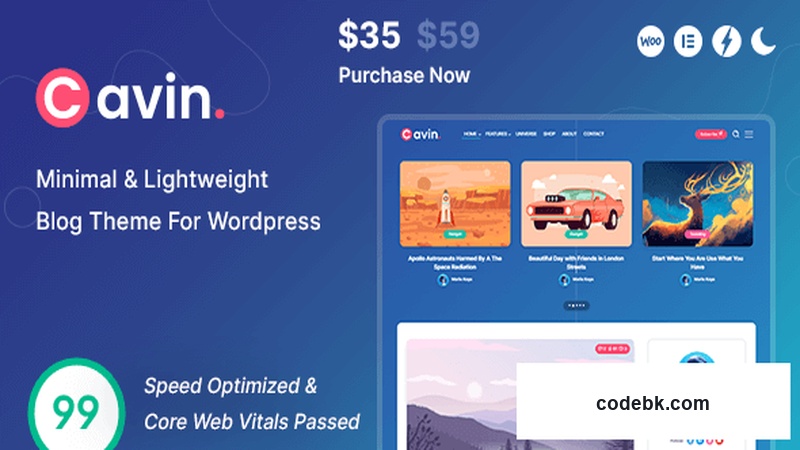
I recently spun up Cavin v1.9 on a client's lifestyle blog project, and honestly, it's one of those themes that quietly does its job without getting in the way. The design aesthetic is clean, modern, and intentionally minimal — think generous whitespace, strong typographic hierarchy, and a layout that lets your content breathe rather than fighting for attention with unnecessary decoration.
This theme was clearly built with personal publishers in mind. It's ideal for lifestyle magazines, travel journals, beauty and wellness blogs, or anyone running a premium-feeling personal blog. If your goal is a fast-loading, visually polished site that doesn't scream "template," Cavin hits the mark.
Design & Page Builder Workflow
Cavin plays nice with both Elementor and the native Gutenberg block editor, which is a genuine advantage. I tested the Elementor integration first — the pre-built demo templates loaded cleanly, and the custom widgets that come bundled with the theme slot right into the Elementor canvas without any awkward workarounds. Layouts like the homepage grid, author bio sections, and portfolio-style article showcases are ready to go out of the box.
Switching to Gutenberg, the experience is equally smooth. The theme registers custom blocks for post columns, quote styling, and featured article highlights. No plugin clutter, no compatibility hiccups. For developers who prefer block-based workflows over page builders, this one feels thoughtfully considered.
The demo library covers several distinct niches — lifestyle, travel, health, beauty — each with its own color palette and font pairings that still fall under the same clean design language. Importing a demo takes under two minutes, and the starter content maps cleanly onto your existing posts and pages if you're migrating rather than starting fresh.
Practical Functionality
One thing I appreciate about Cavin is how functional it is without bloat. The responsive behavior is solid across breakpoints — mobile layouts don't collapse into awkward stacks, and the navigation adapts gracefully between desktop and phone views.
For e-commerce, the theme includes WooCommerce support. It's not a full-blown shop theme, but the product grid and single-product layouts match the overall aesthetic. If you're running a small boutique alongside your blog, it works fine.
Header and footer customization is handled through the WordPress Customizer, which keeps things intuitive. You get controls for logo placement, menu ordering, widget areas, and background colors without ever touching code. The global color and typography settings propagate consistently across the site, which saves time during branding iterations.
Multi-language support is there via native WordPress i18n functions and full RTL compatibility. If you're targeting international audiences, the theme won't fight you on it.
Performance-wise, the codebase is lightweight. I ran Lighthouse audits on a demo installation and saw strong scores in Core Web Vitals — no heavy JS dependencies, minimal CSS bloat, and images handled efficiently. That's the kind of baseline that makes maintenance easier down the road.
Technical Specifications
| Specification | Details |
|---|---|
| WordPress Version | 5.0 or higher |
| PHP Version | 7.4 or higher |
| Compatible Builders | Elementor, Gutenberg |
| Bundled Plugins | None required (all features are theme-native) |
| WooCommerce Support | Yes |
| RTL & Multi-language | Full support |
| Child Theme Ready | Yes |
| Documentation | Included with purchase |
Final Takeaway
Cavin v1.9 is a well-executed minimal blog theme that prioritizes readability and performance over flashy features. It's a strong fit for personal bloggers, lifestyle publishers, and small content teams who want a clean foundation without the overhead of heavier themes. The dual builder support (Elementor and Gutenberg) covers most workflow preferences, and the lightweight architecture means you won't be wrestling with performance plugins just to keep the site fast.
If you're building a visually driven personal blog and want something that looks polished without requiring a degree in front-end development to customize, this is a practical, reliable choice.